Key takeaways:
- A digital wallet is an application that stores your debit cards, credit cards, loyalty programme, and more in just one place.
- Popular types include mobile wallet (Google Pay), online wallet (PayPal), and closed wallets (Starbucks).
- 57% individuals use mobile wallets like Apple and Google Pay, according to UK Finance. It is 42% higher than the previous year.
- Digital wallets use NPC and QR codes to allow seamless payments online through smartphones and tablets.
- Most e-wallets use 2 factor authentication and a Unique PIN that users can use only once. It thus ensures the best security parameters.
Remember the last time you walked into a shop without your physical wallet — and still paid with just your phone or smartwatch? That’s no longer a niche habit but a mainstream behaviour in the UK.
As of 2024, over half of UK adults (57%) are now registered to use mobile wallets for contactless and online payments, while cash usage fell below 10% of all transactions for the first time. Contactless and mobile wallet payments are rapidly replacing cash and even physical cards for many everyday purchases.
This blog will explain what a digital wallet is, the types available in the UK, examples you may already use, the key features that make them popular, and how to start using one confidently.
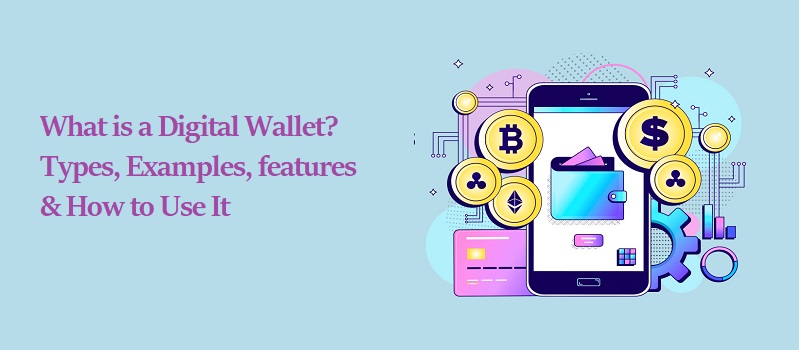
What is a digital wallet?
A digital wallet is a software-based tool that stores customer payment information and helps them make quick and secure purchases. Most advanced e-wallets link customers’ payment methods, like credit card information, to the vendor that hosts the transaction.
The vendor can be anyone from the e-commerce marketplace or a reseller. E-wallets are quite popular among smartphone holders. It helps them make quick and smart purchases.
What are the most common types of digital wallets?
Depending on the type of device and the usage, there are mainly 3 types of digital wallets:
Mobile wallets
These are applications on your phone that help you pay the dues online. You can do it with:
- Apple wallet
- Samsung Wallet
- Google Wallet
How do they work?
They store virtual versions of your cards and use technologies like NFC to pay when you tap your phone
Online wallets
These are usually web-based services that let you store funds and make online transactions.
- Paypal
- Wise Wallets
Store Value Wallets
These include prepaid and gift wallets. Here, you pre-load the money and spend it here.
Can a personal loan help if the wallet does not work?
While personal loans may not be the immediate solution to wallet outage, they may prove helpful in other conditions. It is generally advisable to keep cash if the wallets don’t work. If you can wait for the payment or conduct it after some time, the personal loans may help. It provides you with the needed cash within 24 hours of the loan application.
Also, you may get small loans to cover emergency payments like a pending electricity bill. These are usually faster, and you get the money within 30 minutes.
However, there is a limit to the amount you may get and borrow. It depends on your affordability and needs. Thus, explore the best personal loan rates in the UK in 2026 as an alternative to fund critical needs. It helps you fetch one with low interest rates and fees. Remain aware of the additional and hidden loan fees.
What are the key features of digital wallets?
There are several major digital wallet providers. Each offers a unique feature according to the solutions they want to provide to the customers. Here are some key features of the most popular digital wallets in the UK:
|
Provider |
Device supported |
Key features |
|
Apple Pay |
iOS only |
Biometric security system, integration with the Apple security system |
|
Samsung Pay |
Samsung devices only |
MST and NFC support, and it works with multiple terminals |
|
Google Pay |
Android devices only |
Wide compatibility, stores loyalty cards |
|
PayPal |
Any device |
Online payments, international support |
Precisely, the major features of digital wallets include:
- Contactless and online payments
- Multiple payment methods to leverage
- Added non-financial uses
- Secure transactions and payments
How to use a digital wallet?
Here is the step-by-step guide to use a digital wallet consciously and responsibly:
Step 1- Set up the app
- Open the Apple, Google, or Samsung wallet
- Sign in with your account or create one
Step 2- Add payment methods
You can add your debit or credit card by scanning the details. Sometimes, it may be required to enter your details manually. It is rather a safer way to keep your account from any malicious activity.
Next, follow the bank’s authentication steps via OTP or prompts that you receive on the application.
Step 3- Make payments in-store
You can start making payments by unlocking your phone and holding it against the contactless QR code or scanner. Authenticate it using a 2-factor authentication PIN or biometrics.
Sometimes, the payment does not work if the bank’s server is down. You don’t need to panic as the money does not get lost. Instead, the transaction never happens. Even if it does, you get the money back or the text from the respective bank.
In that case, if you need to make a small payment of 2000 pounds urgently, don’t worry. You may get a £2000 loan for bad credit with no guarantor online. It helps you meet your needs without any delays. You get the money the same day if you meet the eligibility criteria.
It does not require detailed documentation, collateral, or providing a guarantor. Instead, the loan approval depends on your ability to repay the dues. If you can, you may get the loan with a fixed instalment period.
Step 4- Online and Peer payment option
You now get an option to select the wallet from which you want to conduct the payment. Confirm the payment with authentication (Face or fingerprint). You can use wallet transfer similarly to send money to colleagues or friends.
What’s next for Digital Wallet?
By 2030, digital wallets may become more common,
- It will prove a great shift from credit and debit cards (plastic money)
- It may be used widely for travel and identity
- New regulatory frameworks ensure competition and security
With half of adults already using mobile wallets and the government’s initiative to bring IDs into digital wallets, the next few years may prove dominant for digital wallets.

Emma Anderson is a seasoned financial writer and consultant. She has more than eight years of experience in the UK financial and loan sector.
She is so passionate about financial literacy and responsible borrowing. Therefore, Emma has gained specialisation in explaining everything about complex loan products and financial management planning for every borrower.
Before joining the team at Quickloanslender, Emma worked as a financial advisor. She helped number of the UK locals in solving the problems related to their debt consolidation and short-term credit. She has an aim of providing clear, transparent, and actionable advice for everyone. It lets her readers making informed loan decisions according to their affordability.
Each blog, written after deep research, to have personal budgeting tips and financial education.