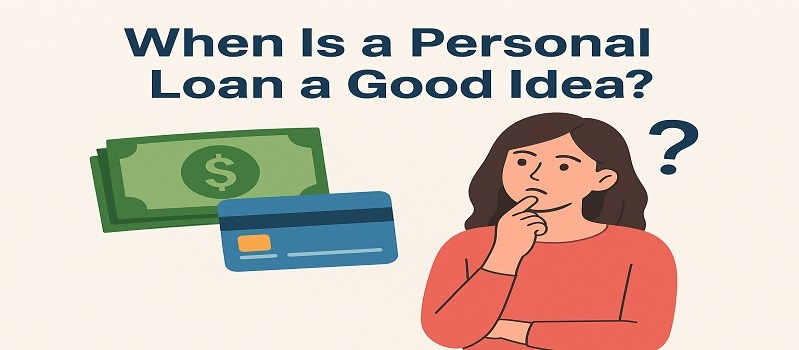
A personal loan is an unsecured loan. They come in all shapes and sizes. Small personal loans are emergency loans, aimed at those who run out of money to pay for unexpected expenses. These loans are paid off in one fell swoop. However, larger unsecured loans, on the other hand, are aimed at planned big expenses. They are paid down in fixed instalments over an extended period of time.
The following tables mention the difference between the two kinds of loans:
|
Small personal loans |
Large personal loans |
|
These loans are aimed at helping people fund their small unexpected expenses, such as a car repair. |
These loans are aimed at people who need money to cover big expenses, whether planned or unforeseen. |
|
The maximum repayment period is one month. |
The maximum repayment period is up to five years. |
|
The whole debt is paid off in one go. |
The whole debt is paid down in fixed instalments. |
|
They cannot build your credit history even if you pay them off on time. |
They can help you build or ameliorate your credit score if you pay them off on time. |
When is taking out a personal loan a good idea?
Here is when you should consider taking out a personal loan:
1. Debt consolidation
Debt consolidation personal loans are the best choice when you want to consolidate your debts. If you are struggling with multiple debts, you can consolidate all of them into one personal loan. For instance, if you have three loans of £500, £1,000, and £600, you can merge all of them into a single large personal loan of £2,100.
Since you will be paying down the debt in fixed instalments over an extended period of time, you will find it a bit easier to manage payments. However, there are certain things to bear in mind:
- Credit card bills cannot be consolidated. If you have multiple credit card bills, you will need to apply for a balance transfer card.
- Consolidation loans are usually small loans. Most of the lenders do not lend money more than £1,000.
- You must have a good credit score to be eligible for a consolidation loan.
You should carefully weigh up the pros and cons of consolidation loans while considering them.
2. Home refurbishment
Personal loans are an ideal choice when you have to renovate your house. Whether it is a small repair or a major overhaul, these loans can help you qualify for lower interest rates as long as your overall financial condition is strong.
As these loans will be paid down over an extended period, you can easily manage payments. Home renovation loans generally last for up to five years. If you need larger money for a longer period of time, your lender will require you to put down collateral.
Here is the difference between unsecured and secured home improvement loans:
|
Unsecured home improvement loans |
Secured home improvement loans |
|
These loans do not require collateral. |
They are subject to collateral. |
|
The repayment term lasts less than 5 years. |
The repayment length is 5 years or more. |
|
Interest rates will be high due to a high default risk. |
Interest rates will be lower than those of unsecured home renovation loans. |
|
The borrowing amount is between £5,000 and 15,000. |
The borrowing amount is between £10,000 and £30,000. |
3. Major life events
Personal loans at low interest rates are also helpful to cover the cost of major life events such as weddings, funerals, and education. Approval depends on your credit rating and repayment potential.
Why do you need to be cautious while using these loans?
Personal loans are easily accessible despite poor credit histories. Experts advise carefully evaluating your repayment capacity even if you are employing them for unavoidable reasons. Here is what you need to be careful about:
1. There is always a risk of non-essential spending
Convenience requires extra caution. Access to personal loans might tempt you to utilise them for nonessential reasons, such as a honeymoon, a vacation, and other luxury items. Though the loan is to be settled over an extended period, you have to pay interest as well. There are also associated fees that are paid throughout the loan term periodically.
These loans can put a strain on your budget as they are normally expensive. With a poor credit rating, interest rates will be even higher.
2. A risk of debt accumulation is high
Consolidation makes payments easier, whether you apply for a personal loan or a balance transfer card, but there is always a scope for taking out a new loan and using your credit card.
Consolidation does not dwindle the size of debt, and therefore, sticking to taking on new obligations will only amplify the financial burden. You will have to take control of your financial habits. The propensity to keep spending money on unwanted things will only invite monetary problems for you.
3. Not all lenders are genuine
There are some unregistered lenders in the market who target credulous borrowers with subprime ratings who have been refused elsewhere. These lenders provide unsecured personal loans with guaranteed approval, suggesting no credit checks at all.
The fact is that no FCA-regulated lender can guarantee approval, as a lending decision is made after a perusal of your credit file and income sources. Lenders making such bogus claims charge exorbitant interest rates, which might result in a debt trap.
What to look for while choosing a personal loan?
Here is what you need to look for while choosing a personal loan:
- Check their authorization.
- Compare interest rates so as to choose the lowest possible rate.
- Assess the reputation of a lender by reviews.
To wrap up
A personal loan is a good idea when you need money for home renovation, a wedding, a funeral, or consolidating debts. However, it is enjoined that you carefully scrutinise your repayment capacity.
Personal loans are expensive. Borrowing more than you can afford will severely impact your financial condition. Make sure that you do not use these loans for any non-essential expenses.

Emma Anderson is a seasoned financial writer and consultant. She has more than eight years of experience in the UK financial and loan sector.
She is so passionate about financial literacy and responsible borrowing. Therefore, Emma has gained specialisation in explaining everything about complex loan products and financial management planning for every borrower.
Before joining the team at Quickloanslender, Emma worked as a financial advisor. She helped number of the UK locals in solving the problems related to their debt consolidation and short-term credit. She has an aim of providing clear, transparent, and actionable advice for everyone. It lets her readers making informed loan decisions according to their affordability.
Each blog, written after deep research, to have personal budgeting tips and financial education.